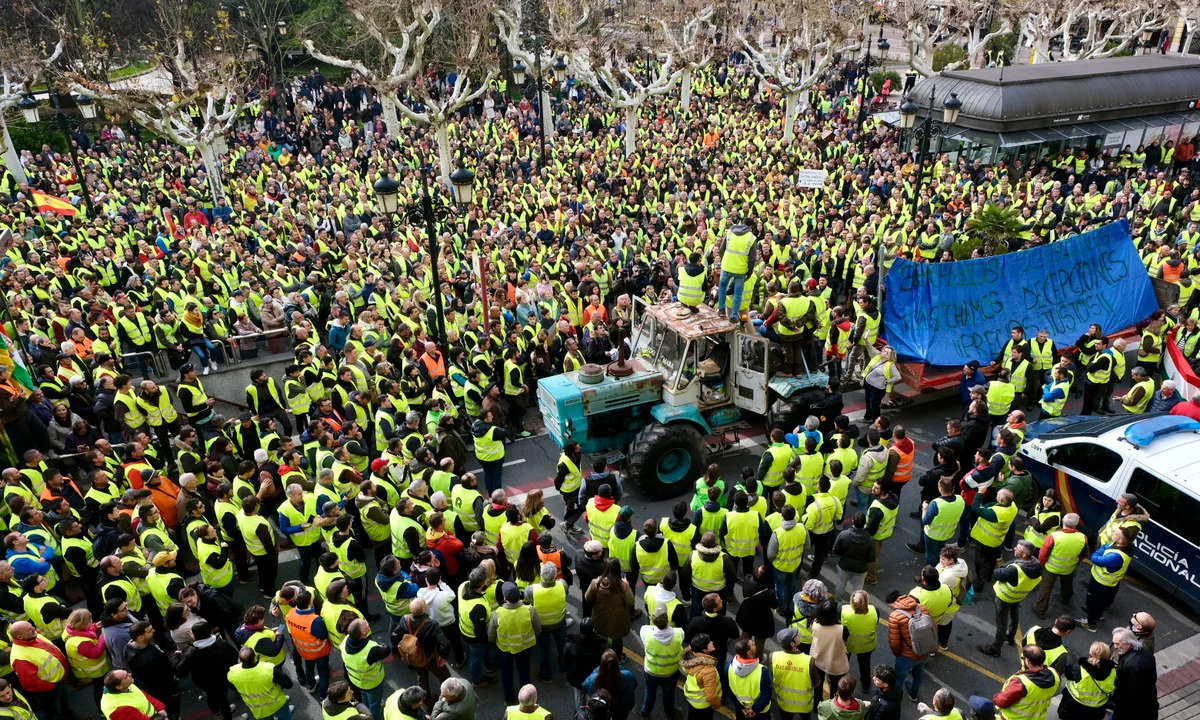
Farmers across Spain have taken to the streets to protest rising production costs and economic pressures, highlighting the challenges facing the agricultural sector in the country. The demonstrations, which have affected regions from Andalusia and Catalonia to Castilla y León and Valencia, underscore the urgent need for government support and policy interventions to ensure the sustainability of Spain’s farming industry.
Background of the Protests
Farmers are reacting to a combination of factors that have increased the cost of production and reduced profitability:
- Rising input costs: Prices for fertilizers, seeds, machinery, and fuel have risen sharply, squeezing margins for farmers.
- Energy price volatility: Higher electricity and fuel costs have increased operational expenses for irrigation, heating, and machinery use.
- Market pressures: International competition, fluctuating commodity prices, and retail consolidation have limited farmers’ ability to set fair prices for their products.
- Climate-related challenges: Droughts, heatwaves, and unpredictable weather have impacted yields, further straining farmers’ finances.
Nationwide Impact
The protests are affecting multiple sectors of Spain’s agricultural industry:
- Fruit and vegetable producers are calling for fairer pricing and subsidies to offset rising costs.
- Livestock farmers face higher feed prices and veterinary costs, threatening the viability of small and medium-sized farms.
- Olive oil and wine producers, key export sectors, are also demanding support to maintain competitiveness in international markets.
In some regions, blockades and demonstrations have disrupted transport of agricultural goods, affecting supply chains and raising concerns for both domestic and export markets.
Government and Industry Response
Spanish authorities have acknowledged the farmers’ concerns and are exploring measures to alleviate pressure:
- Subsidies and financial aid: Proposals include targeted grants, low-interest loans, and emergency support for affected farmers.
- Price monitoring and regulation: Authorities are considering mechanisms to ensure fair pricing and prevent market distortions.
- Sustainability incentives: Programs promoting efficient water use, renewable energy adoption, and climate-resilient practices aim to reduce long-term costs.
- Dialogue with unions: Agricultural unions and government representatives are holding negotiations to address immediate financial concerns and longer-term structural reforms.
Industry organizations are also encouraging cooperation between farmers, distributors, and retailers to improve transparency in supply chains and ensure fair compensation for producers.
Regional Variations
The protests have been particularly visible in regions with high agricultural output:
- Andalusia: Olive oil and citrus producers lead demonstrations due to high energy and irrigation costs.
- Catalonia: Vegetable and fruit farmers demand better access to subsidies and fair pricing mechanisms.
- Castilla y León and Extremadura: Livestock farmers highlight rising feed and veterinary expenses as key challenges.
These regional movements reflect the diverse challenges faced across Spain’s agricultural landscape.
Long-Term Challenges
While immediate financial relief is critical, experts emphasize that Spain’s agricultural sector faces structural challenges that require long-term solutions:
- Sustainable farming practices: Adapting to climate change and reducing reliance on costly inputs is essential for resilience.
- Market diversification: Expanding export opportunities and reducing dependency on volatile commodity markets can improve stability.
- Digital and technological adoption: Precision farming, smart irrigation, and automation can reduce costs and increase efficiency.
The recent farmers’ protests highlight the economic pressures and vulnerabilities within Spain’s agricultural sector. Rising production costs, climate challenges, and market volatility have created an urgent need for support measures and policy reforms.
By addressing both immediate financial pressures and long-term structural challenges, Spain can protect its agricultural workforce, maintain food security, and ensure the sustainability of one of its most vital economic sectors. The government, industry organizations, and farmers themselves must collaborate to secure a viable and competitive future for Spanish agriculture.